



DraftSight Essentials
This course aims to teach you how to use DraftSight to optimize your drawings and designs for manufacturability so you can maximize quality,
avoid rework and decrease time to market.
$945.00 – $995.00

This course aims to teach you how to use DraftSight to optimize your drawings and designs for manufacturability so you can maximize quality,
avoid rework and decrease time to market.
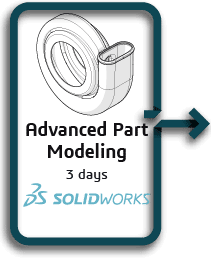
Advanced Part Modeling teaches you how to use multibody solids, sweeping and lofting features, and the more advanced shaping capabilities of SOLIDWORKS.
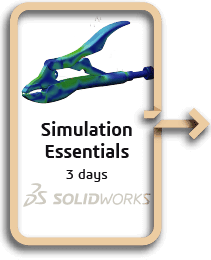
Topics covered in this course are: introduction to FEA; FEA principles and theory; element quality; linear static analysis of parts; gap/contact and advanced assembly analysis; analysis setup and post-processing; evaluating FE convergence; limitations of linear analysis; load and boundary condition application; stress analysis with thermal loading; model and result validation; automatic report generation.
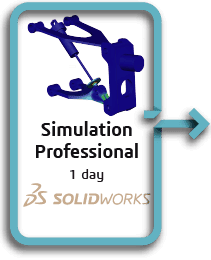
Topics covered in this course are: heat transfer analysis, steady state, and transient; frequency analysis; effect of in-plane loading on thin-walled structures; structural failure under compressive loads; buckling of elastic structures; meshing options; drop testing; fatigue; optimization.
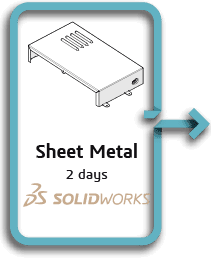
Sheet Metal teaches you how to build sheet metal parts using SOLIDWORKS mechanical design automation software. Building standalone sheet metal parts, and converting conventional parts to sheet metal, including in the assembly context, are covered.
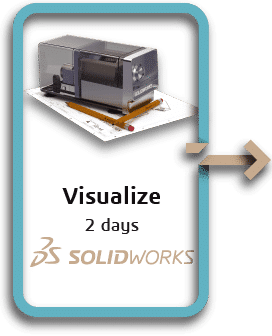
This course teaches how to use the SOLIDWORKS Visualize software to
create professional, high-quality renderings, videos, and VR outputs for marketing purposes.
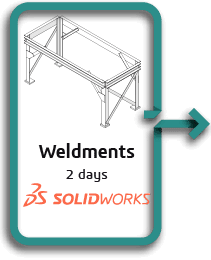
Weldments teaches you how to create welded structures with standard
structural members. Weld beads are also covered.
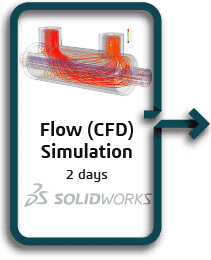
This course teaches the essential skills you will need to start performing fundamental computational fluid dynamics (CFD) simulations on your own using SOLIDWORKS Flow Simulation. This two-day training program provides an in-depth session on the basics of fluid flow analysis, covering meshing concerns, modeling concerns, analysis, post-processing, available options, and preferences.
